





How Do You Prepare a Pickup Truck for Severe Winter Weather?
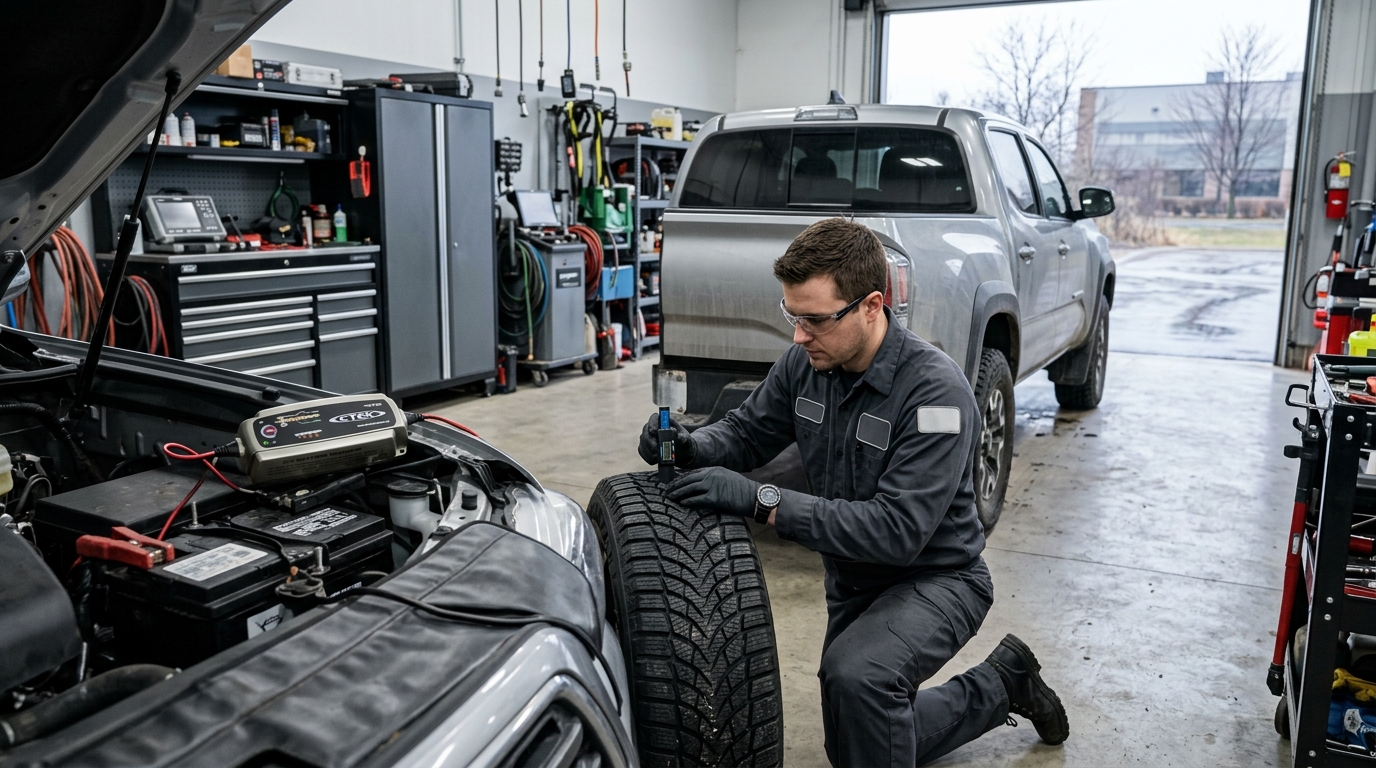
Preparing a pickup truck for severe winter weather requires testing battery cold cranking capacity, setting proper cold tire inflation, verifying coolant freeze protection, switching to winter-weight engine oil, inspecting four-wheel-drive engagement, and installing winter-rated wiper blades. Completing these essential mechanical checks before freezing temperatures arrive prevents cold-weather starting failures, restores traction on snow-covered roads, and protects major engine and drivetrain components from severe thermal stress.
Winter driving conditions place immense physical demands on a working pickup. As temperatures plunge, battery power decreases while engine oil thickens, requiring significantly more electrical current to turn over the crankshaft. At the same time, highway surface grip deteriorates due to ice, slush, and packed snow. Truck owners who rely on their vehicles for daily hauling, commercial trade work, or agricultural transport must take a proactive approach to seasonal maintenance rather than waiting for the first major snowstorm to expose hidden mechanical weaknesses.
A comprehensive winter preparation routine begins with a thorough multi-point system inspection:
- Battery and Electrical System: Perform a professional load test on the battery, clean corrosion from cable terminals, and check alternator output.
- Tire Tread and Inflation: Adjust tire pressures to match vehicle manufacturer specifications, verify tread depth is at or above 4/32 inch, and inspect sidewalls for cracks or damage.
- Cooling System and Vital Fluids: Confirm antifreeze concentration provides protection down to at least -34°F, top off winter-rated windshield washer fluid, and inspect brake fluid condition.
- Drivetrain and Transfer Case: Exercise four-wheel-drive (4WD) high and low ranges to verify smooth gear engagement and check differential fluid levels.
- Undercarriage and Corrosion Defense: Wash away accumulated dirt and apply protective undercoating to vulnerable frame rails, fuel lines, and brake lines.
For drivers navigating the rolling hills and surrounding flat farmland near Malvern, cold mornings and icy rural routes make early winter service essential. Our factory-trained technicians at Daystar Chrysler Dodge Jeep Ram can complete every item on this pre-winter checklist during a single service visit. To get your truck ready for the cold months ahead, find our service center location in Malvern or give our service desk a quick call at (330) 863-1144 to book your pre-season checkup.
Table of Contents
- Which Battery CCA Ratings and Electrical Checks Prevent Cold-Weather No-Starts?
- What Engine Oil Weights and Coolant Ratios Protect Pickup Engines in Freezing Temps?
- How Do Dedicated Winter Tires Compare to All-Season Tires on 4WD Pickup Trucks?
- What Winter Accessories, Block Heaters, and Underbody Treatments Keep Your Truck Ready?
- Answers to Frequent Winter Pickup Service Questions
- Keep Your Pickup Working Safely Through Winter
Which Battery CCA Ratings and Electrical Checks Prevent Cold-Weather No-Starts?
A pickup truck working through sub-freezing winter weather requires a battery rated between 600 CCA and 800 CCA (Cold Cranking Amps) or higher to ensure dependable starting performance. At 32°F, a conventional automotive battery loses approximately 35 percent of its power capacity, and at 0°F, available starting power drops by roughly 60 percent while the engine requires up to twice as much force to crank over.
Cold temperatures slow the internal chemical reactions within a battery, severely limiting the peak amperage delivered to the starter motor. Heavy-duty gasoline V8 engines and high-compression diesel engines, such as those in a Ram 1500 or heavy-duty Ram 2500, place exceptionally high electrical demands on the cranking system during sub-zero mornings. AAA research indicates that any vehicle battery older than three years faces a significantly elevated risk of sudden failure during severe cold snaps. A professional load test measures actual amperage delivery under a simulated engine load, identifying a failing cell long before it leaves a driver stranded in a freezing driveway.
Corrosion buildup on battery posts and cable clamps introduces electrical resistance, further restricting current flow. White or greenish powdery deposits on the terminals prevent the alternator from fully recharging the battery during short trips. During a pre-winter electrical inspection, technicians clean the terminal posts, tighten cable hardware, inspect the starter motor draw, and test alternator charging output. Replacing a weak unit with genuine Mopar batteries and electrical components ensures your truck delivers maximum cold cranking power when winter strikes.
What Engine Oil Weights and Coolant Ratios Protect Pickup Engines in Freezing Temps?
Protecting a pickup engine during freezing temperatures requires maintaining a 50/50 coolant-to-water mixture for freeze protection down to -34°F and utilizing a lower-viscosity motor oil such as 0W-20 or 5W-30 for immediate cold-start lubrication. Severe winter climates may require a 60/40 concentration of antifreeze to water for protection down to -60°F, though ethylene glycol concentration should never exceed 70 percent of total cooling system volume.
Engine oil thickens considerably as ambient temperatures drop toward freezing. Heavy, high-viscosity oil flows slowly through narrow internal galleries during initial startup, leaving valvetrain components and bearings temporarily vulnerable to metal-on-metal friction. Modern engine designs specify multi-viscosity synthetic oils that flow quickly at low temperatures while retaining crucial film strength once the engine reaches full operating temperature. Using the factory-recommended winter oil weight ensures rapid oil pressure buildup, reducing internal engine wear during cold starts on rural work routes around Minerva.
Cooling system health is equally critical for winter survival. Engine coolant contains anti-corrosion additives and lubricants for the water pump seal that degrade over time. Conventional coolant typically requires replacement every two to three years or 30,000 miles, whereas organic additive technology (OAT) formulas last longer but still require periodic concentration testing using a refractometer or hydrometer. Discolored, rusty, or milky coolant signals severe internal contamination, indicating the need for an immediate cooling system flush to protect the engine block, heater core, and radiator from costly freeze damage.
How Do Dedicated Winter Tires Compare to All-Season Tires on 4WD Pickup Trucks?
Dedicated winter tires deliver up to 30 percent shorter stopping distances on ice and snow compared to standard all-season tires because their specialized tread compounds remain soft and pliable in temperatures below 45°F. On four-wheel-drive pickup trucks, winter tires must always be installed on all four wheels to maintain uniform traction across both drive axles and prevent mechanical stress on transfer cases or differential assemblies.
All-season tires use rubber compounds engineered for long tread life and warm-weather durability, but these compounds harden when temperatures drop below freezing, reducing chemical grip on cold asphalt. In contrast, winter tires feature high-silica tread compounds that stay flexible in bitter cold, along with aggressive tread patterns containing thousands of microscopic cuts called siping. These sipes open up to bite directly into packed snow and surface ice, channeling slush away from the tire footprint.
A common driver misconception is that four-wheel drive compensates for worn or improper tires. National Highway Traffic Safety Administration (NHTSA) winter driving guidelines emphasize that while 4WD improves acceleration traction in deep snow, it provides zero additional braking grip or lateral cornering stability on black ice. Truck tires require a minimum tread depth of 4/32 inch for adequate snow traction—well above the federal legal minimum of 2/32 inch. Furthermore, ambient tire pressure drops roughly 1 psi for every 10°F drop in outdoor temperature. Checking cold tire pressures weekly prevents underinflation, uneven tread wear, and compromised vehicle handling.
What Winter Accessories, Block Heaters, and Underbody Treatments Keep Your Truck Ready?
Engine block heaters, protective underbody coatings, winter wiper blades, and bed ballast form an essential severe-weather defense system for working pickup trucks. Plugging in an engine block heater two to three hours before starting when ambient temperatures fall below 15°F—or 0°F for diesel powertrains—warms internal engine coolant, dramatically reduces starter motor strain, and speeds up cabin heat delivery.
Because unladen pickup trucks carry a significant forward weight bias over the front axle, adding ballast over the rear axle substantially improves rear-wheel traction on snow-covered roads. Placing 200 to 300 pounds of bagged sand or gravel directly between the rear wheel wells stabilizes the back end without overloading the suspension. Winter wiper blades feature rugged rubber boots that prevent ice and slush from packing into the frame structure, maintaining clear driver visibility through heavy snowfall.
Corrosive road salt and liquid de-icers pose a continuous threat to a truck's frame, suspension control arms, brake lines, and fuel connections. Rinsing the undercarriage at least twice a month during winter removes trapped salt residue and mud accumulation. Preparing your vehicle with functional accessories ensures year-round versatility. Reviewing our frequently asked winter maintenance questions provides further insight into seasonal vehicle preparation.
Answers to Frequent Winter Pickup Service Questions
Q: How often should pickup truck tire pressure be adjusted during winter?
Tire pressure should be checked weekly using a reliable tire gauge when the truck has been parked for at least three hours. Because tire pressure drops by approximately 1 psi for every 10°F drop in outside temperature, major winter weather fronts can cause a rapid loss of inflation pressure. Keeping tires inflated to the manufacturer's recommended door-placard specification ensures proper tread contact, maximum fuel economy, and stable handling on icy roads.
Q: Why does standard washer fluid freeze on the windshield, and how can it be fixed?
Standard summer windshield washer fluid consists primarily of water and mild detergents that freeze rapidly when sprayed onto cold glass at highway speeds. Severe winter driving requires a winter-rated washer fluid formulated with methyl alcohol, which remains liquid down to -20°F or lower. Completely draining summer fluid from the reservoir before refilling with a winter formula prevents frozen fluid lines and cracked washer pumps.
Q: Does four-wheel drive eliminate the need for bed ballast or dedicated winter tires?
Four-wheel drive only assists with sending engine power to all four wheels for forward movement; it does not increase tire friction during braking or cornering. Because pickup trucks have light rear bed ends when empty, adding ballast over the rear axle provides necessary downforce for rear tire traction. Pairing four-wheel drive with dedicated winter tires offers the highest level of stability, control, and stopping performance on packed snow and ice.
Q: How does liquid road salt damage a pickup truck frame and brake system?
Chemical de-icers and liquid road salt stick to exposed metal underbody components, accelerating oxidation and rust formation on frame rails, steel brake lines, and exhaust piping. Moisture and heat from driving react with trapped salt residue, causing rust to weaken structural components from the inside out. Routine undercarriage pressure washes remove corrosive buildup before severe damage occurs.
Q: When should wiper blades be replaced heading into the cold months?
Wiper blades should be replaced immediately if they leave streaks, smear moisture, or chatter across the windshield during operation. Conventional wiper blades feature exposed metal hinges that freeze solid in winter storms, preventing the rubber edge from contacting the curved glass. Upgrading to beam-style or booted winter wiper blades before freezing weather guarantees clear driver vision during severe snowfall. You can browse current Mopar service coupons and specials to save on seasonal wiper replacements and filter services.
Keep Your Pickup Working Safely Through Winter
Taking time to prepare your pickup truck for winter safeguards your vehicle investment, protects critical engine components, and maintains reliable performance on freezing roads. From load-testing aging batteries and checking coolant concentrations to installing winter tires and inspecting four-wheel-drive engagement, comprehensive seasonal service gives you complete peace of mind behind the wheel.
Our factory-certified technicians specialize in complete maintenance care for Chrysler, Dodge, Jeep, and Ram trucks. Whether you need a simple oil change using low-viscosity winter oil or a comprehensive multi-point winter vehicle inspection, our team delivers fast, transparent service with clear pricing.
Do not wait for a freezing morning or a sudden winter storm to test your truck's limits. Stop by our Malvern service department today, or contact our service team at (330) 863-1144 to schedule your pre-winter service appointment.